

A great tutor adapts to how a student thinks, rebuilds their confidence, and builds independence so they no longer need the tutor. Anything less than that is just expensive homework help.
The problem is that effectiveness isn’t always obvious after a few sessions. An instructor can be knowledgeable and well-prepared yet still struggle to connect with a student’s learning style. That’s why a student’s grade rarely tells you whether the sessions are actually working.
In this guide, we’ll explore the qualities that separate effective educators from average ones. We’ll also look at proven effective tutoring methods and the signs that a teaching approach is helping students make real progress.
Let’s get into it.
The Methods That Make Tutoring Work
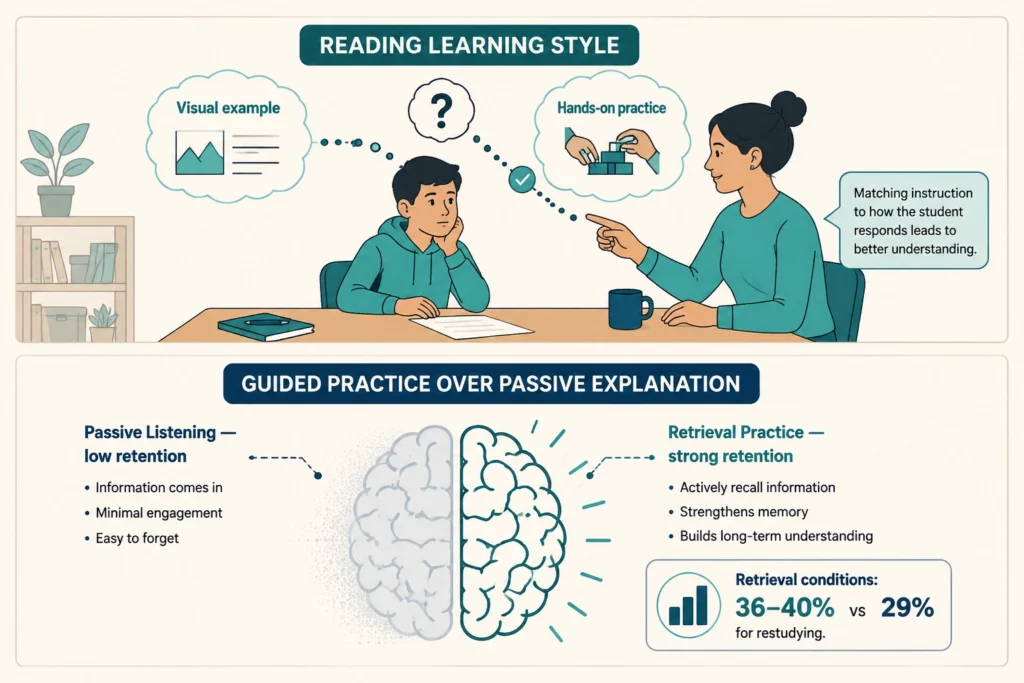
Effective tutoring comes down to two core methods: reading a student’s learning style and focusing on guided practice over passive explanation. We break both down below.
Reading a Student’s Learning Style
Not every student learns the same way. One might grasp a concept immediately through examples, while another needs to work through it slowly with hands-on practice.
A tutor who picks up on those differences early adjusts their approach without waiting for the student to fall behind. That might mean switching from written explanations to verbal walkthroughs, or revisiting a concept the student hasn’t fully grasped yet.
Either way, matching the teaching style to how a student learns is one of the clearest markers of a skilled tutor.
Guided Practice Over Passive Explanation
Listening to a tutor explain something and actually understanding it are two different things. The reason is that passive listening doesn’t require the brain to do much. Retrieval, however, does. It involves pulling information back out and applying it without prompting.
Research backs this up. A study on test-enhanced learning shows that students who engage in retrieval practice perform substantially better on delayed tests than those who rely on restudying. It found that retrieval-based conditions produced final scores of 36–40%, compared to 29% for study-based approaches
One-on-one tutoring creates opportunities for this kind of retrieval. When students work through problems themselves instead of simply listening to explanations, they strengthen their understanding and retain more of what they learn. As they do, tutors can identify misconceptions in real time and correct them before they become lasting gaps in understanding.
Building Trust with Students: What Good Tutors Do Differently
A student who doesn’t trust their tutor won’t admit when they’re lost. As a result, the mentor keeps moving forward while the learner falls further behind.
Good tutors prevent this by focusing on trust early. They check in regularly, watch for signs of confusion, and create space for students to say when they don’t understand. Over time, these habits build a learning environment where learners feel comfortable asking questions and admitting confusion.
That comfort also builds self-confidence. Students who struggle without proper learning support often carry unanswered questions into sessions. A tutor who builds trust early is often the first person they feel comfortable asking.
How Tutors Communicate with Students and Parents
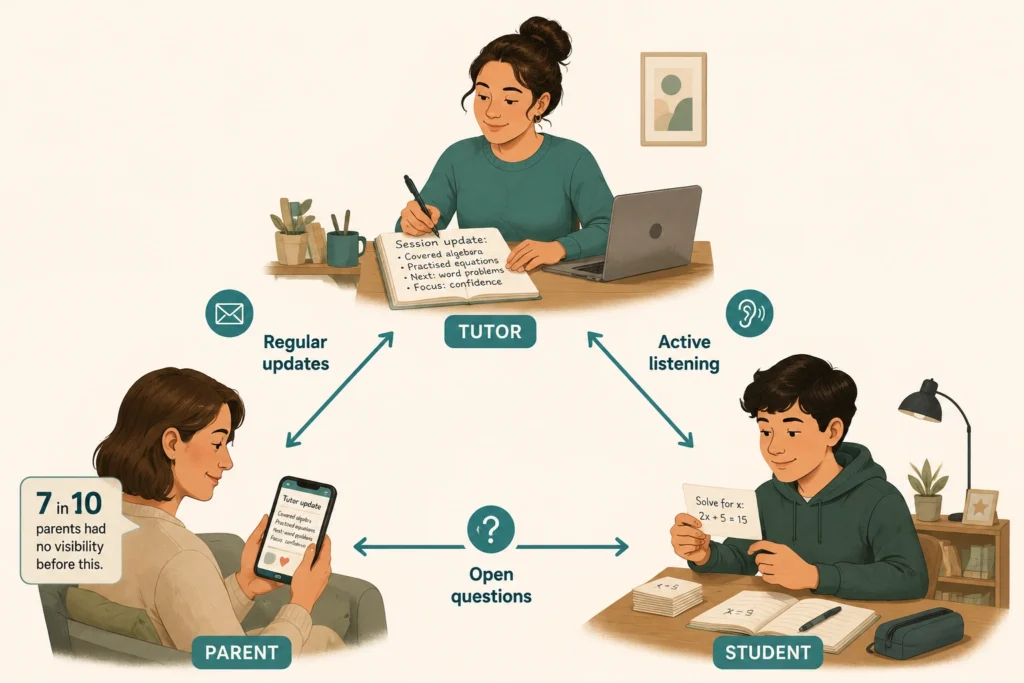
Most parents find out how tutoring is going by asking their child, and most children say “fine.” In fact, 7 out of 10 parents told us that before working with a tutor, they had little visibility into their child’s actual progress between sessions. Good tutors address this gap with a few clear communication practices:
- Regular Updates: A quick note or message after each session gives parents something concrete to act on at home before the next one.
- Active Listening: An attentive instructor who listens carefully to how a student explains something catches confusion that a right or wrong answer would never reveal. Responding to that confusion in the moment stops it from compounding into a bigger gap.
- Open Questions: Asking a student to walk through their reasoning, rather than just confirm an answer, tells the educator exactly where the confusion still lives.
When both sides stay in the loop, the work stops being a black box. This approach keeps everyone working toward the same goals. Students know what’s expected of them, and parents can reinforce what was covered at home between sessions. As a result, the tutoring moves forward instead of covering the same ground twice.
Choosing a Tutoring Format That Works for the Student
The three most common formats are one-on-one tutoring, peer tutoring, and online tutoring. Each one fits a different type of learner.
One-on-one format gives a student the tutor’s full attention for the entire session. It works well for students who need a slower pace or struggle with specific concepts.
Peer tutoring takes a different approach. Studying alongside someone close to their age can reduce the pressure that sometimes comes with adult instruction. And the group learning benefits often extend well beyond the subject being studied.
For students who need more flexibility, online tutoring offers a different advantage. It removes the barrier of location and makes it easier to find support that fits around existing commitments.
That said, format isn’t everything. While each option has its advantages, the best results often come from consistent participation over time. A NCES report found that 9 in 10 public schools rated high-dosage tutoring as at least moderately effective in improving student outcomes.
This points to a broader truth: there isn’t a single best format for every student. Instead, the most effective option is usually the one that matches the student’s needs and learning preferences.
Daily Habits That Make Tutoring Sessions Worth It
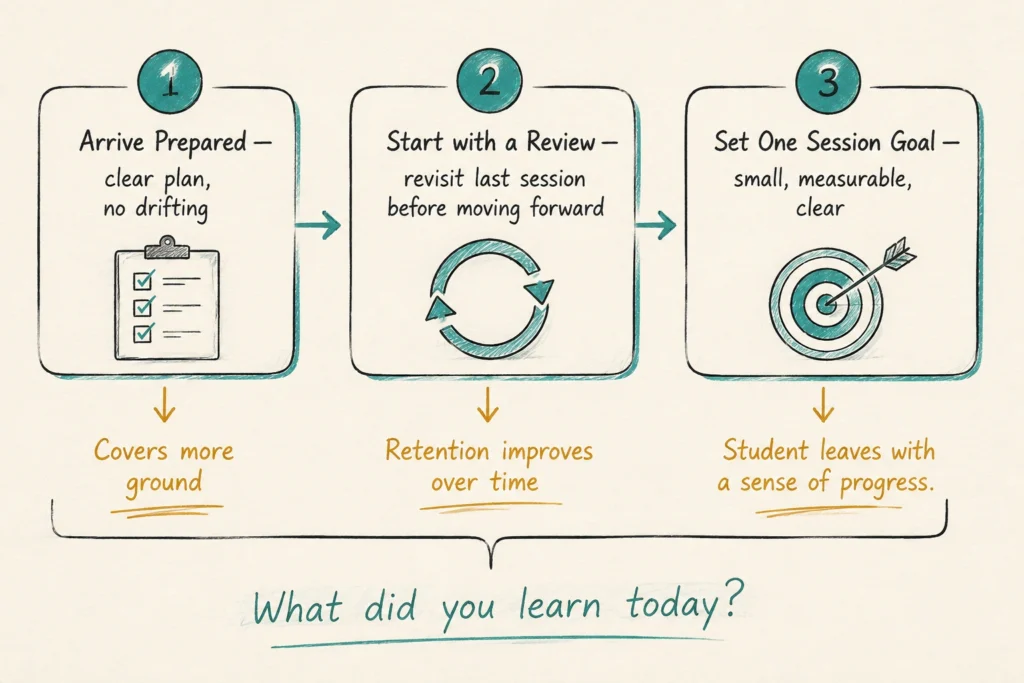
Two students can work with equally skilled tutors and get completely different results. The difference often comes down to what happens before, during, and after each session. Effective mentors follow habits that keep lessons focused, reinforce learning, and give students a clear sense of progress. Three habits, in particular, help make that happen:
- Arriving Prepared: A tutor who comes to each session with a clear plan covers more ground and wastes less of the student’s time. Sessions without a plan tend to drift, and important concepts get skipped.
- Starting with a Review: Briefly revisiting the previous lesson helps students retain information over time. It also tells the tutor whether the learner is ready to move forward or needs more focus on what was already covered.
- Setting Session Goals: Before a session starts, a good tutor identifies one clear outcome for the student to reach by the end. Those goals don’t need to be big. Small, measurable targets give them a clear sense of progress and keep the session focused.
The simplest way to check if a session was worth it is to ask the student one question afterwards: “What did you learn today?” If they can answer clearly, the session likely had a clear focus and objective. Good tutors encourage that kind of reflection because it helps students connect each session to their long-term progress.
Ready to Find the Right Tutor for Your Child?
Finding the right tutor takes time, but knowing what to look for makes the process much easier. A tutor who understands how your child learns, keeps you informed, and comes to each session prepared is worth the effort to find.
So before committing, ask for a trial session. Watch how the tutor responds when your child gets something wrong. A tutor who corrects with patience and encouragement tells you a lot about how the relationship will develop. After the first few sessions, ask your child how they felt. Their answer can reveal whether the approach is a good match.
If you’re looking for structured, student-focused support, Somali CSC works with students to build the confidence and skills they need for real academic progress. Reach out to learn more about our tutoring programs and find the right option for your child.