
Workshops and group learning can improve students’ confidence by providing a safe space to share ideas and practice speaking without fear of judgment. These small-group settings provide a comfortable environment that builds students’ confidence who might not otherwise participate.
But here’s the problem: around 61% of college students in the US fear public speaking, and 80% of UK students report anxiety from oral presentations. This fear leads to low engagement, missed learning opportunities, and weaker educational experiences.
Traditional classrooms make this worse because they focus heavily on individual performance. Fortunately, group learning benefits change this dynamic by letting students collaborate rather than compete. Similarly, student workshops impact learners by providing structured, guided participation.
In this article, we will explore how collaborative learning can build confidence, strengthen learning outcomes, and prepare students for future careers.
We’ll start with the benefits of collaborative learning in the classroom.
The Power of Collaborative Learning and Group Work in the Classroom
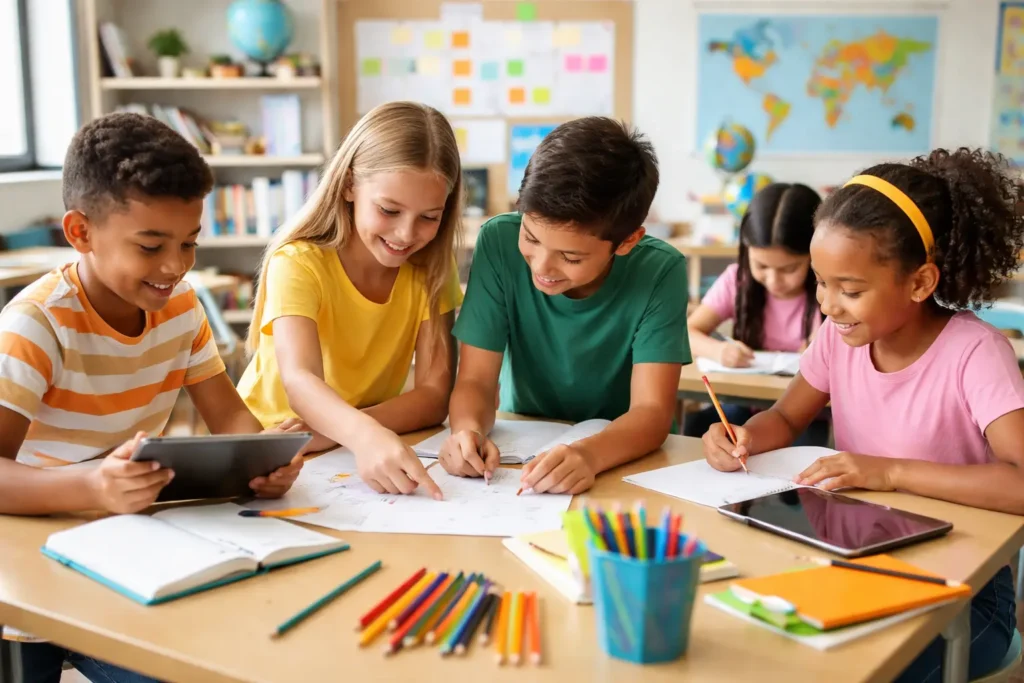
Collaborative learning helps students understand subjects better by getting them to talk, listen, and think together. Here are some practical ways group work builds confidence and improves how students learn.
Active Participation Through Peer Support
Talking through ideas with classmates can help students grasp concepts more deeply. Instead of just reading a textbook or listening to a teacher, they’ll explain the same ideas in their own words during discussions or group tasks.
This can help them see what they truly understand and where they feel unsure. And as they talk things through, they can clear up confusion, correct mistakes, and slowly build a stronger understanding.
What makes this even more helpful is that group support reduces the fear of being wrong. Because students work together, they feel less pressure to be perfect and feel safer taking chances when they know their classmates will help rather than judge them. A study by Frontiers in Psychology even found that peer support increases student engagement, especially in smaller groups.
Pooling Knowledge and Sharpening Ideas
Every student brings a different background and way of thinking to the group. When they share these viewpoints, they’ll begin to see that there are multiple ways to understand the same idea. This will help them question their own assumptions, consider other perspectives, and approach problems with more flexible and creative thinking.
On top of that, working with others can clear up confusion faster. For instance, if a concept feels confusing on your own, a classmate may explain it to you in a way that is easier to understand. This way, students can spot and fix their misunderstandings through discussion and walk away with a stronger grasp of the material.
Critical Thinking in Action
Group discussions and friendly debates can also push students to dig deeper into topics. A classroom debate, for example, can challenge students to put their thoughts into words, defend their views, and consider the other side.
This kind of mental workout will train them to question assumptions and back up their ideas. Over time, students will build a habit of asking good questions and standing behind their reasoning with solid evidence.
Reducing Group Anxiety and Increasing Engagement
Shy students often feel more at ease in smaller settings, where they can share ideas without the pressure of speaking in front of the whole class. So a smaller audience can make participation feel less scary and more manageable.
We’ve noticed that a few simple strategies can draw quieter students into the conversation. Firstly, the teachers need to arrange students into small groups with a mix of confident and shy participants.
Then, they can assign each student a specific role so everyone contributes. This approach will help the quieter students feel more comfortable participating because they know they are not alone and won’t be the center of attention.
Why Collaborative Learning Prepares Students for the Workplace

While education programs that include group learning improve grades, they also teach students important workplace skills, like teamwork, communication, and problem-solving. These are the skills employers actually look for when hiring. In fact, according to the Job Outlook 2025 survey, employers view teamwork as a top priority when bringing on new talent.
Let’s look at some ways these learning experiences bring career advantages.
Group Learning Builds Real-World Skills
Working in groups can help students develop important skills like communication, empathy, and leadership. Through teamwork, they also learn how to work well with others, solve problems, and lead when needed. You simply cannot pick up these abilities from a textbook alone.
And as we mentioned earlier, employers pay close attention to these skills when reviewing job candidates. So graduates who already know how to work well with others have a clear advantage in the job market.
Student Workshops Impact Future Readiness
Student workshops can give learners a chance to practice real workplace situations in a safe, low-pressure setting. For example, teachers can create simulations of office scenarios to help students understand professional behavior and workplace dynamics. In these workshops, students can make mistakes, ask questions, and learn from them without facing real-world consequences.
This way, they can experience workplace challenges firsthand and learn what employers expect, which will build their confidence and career readiness.
Stronger Learning Leads to More Job Opportunities
We’ve noticed that students who take part in workshops and peer instruction generally tend to perform better in job interviews and team settings. Right now, only 41% of graduating seniors feel “career ready,” with employers noting weaknesses in communication, problem-solving, and teamwork. This means that students who fill these gaps naturally stand out to hiring managers.
The confidence students gain from group learning will also carry into their professional lives. If you have practiced speaking up, defending your ideas, and collaborating with others, those strengths will follow you into every meeting and project at work.
Solving Societal Issues
Compared to individualistic and competitive learning, students in groups are often better at solving problems and developing a deeper understanding of the material. This teamwork mindset can help them take on challenges like planning a community project or organizing an event that one person could never handle alone.
Service learning complements this by giving students opportunities to address real social issues and helping them understand the value of their contributions. This way, teamwork and service combine to prepare students to excel in their careers while also making a positive impact in their communities.
Making the Most of Group Learning Benefits for a Better Educational Experience

So, what are your thoughts on using group learning to build confidence? We would love to hear how these ideas connect with your own experiences.
We understand that group learning is not always easy. For students who feel shy or unsure about speaking up, it can feel uncomfortable at first. But with the right mindset and a little practice, it can become one of the best ways to grow both personally and academically.
If collaborative learning feels new to you, you can always start by sharing just one idea in your next group discussion and see how it goes. Pay attention to what your classmates say and try to add to their thoughts. These group settings are often perfect for practicing your communication skills without too much pressure. And over time, these small efforts will build into a steady self-confidence.
Want to keep building on what you have learned? Visit Somali CSC to explore programs that support student success and community growth.